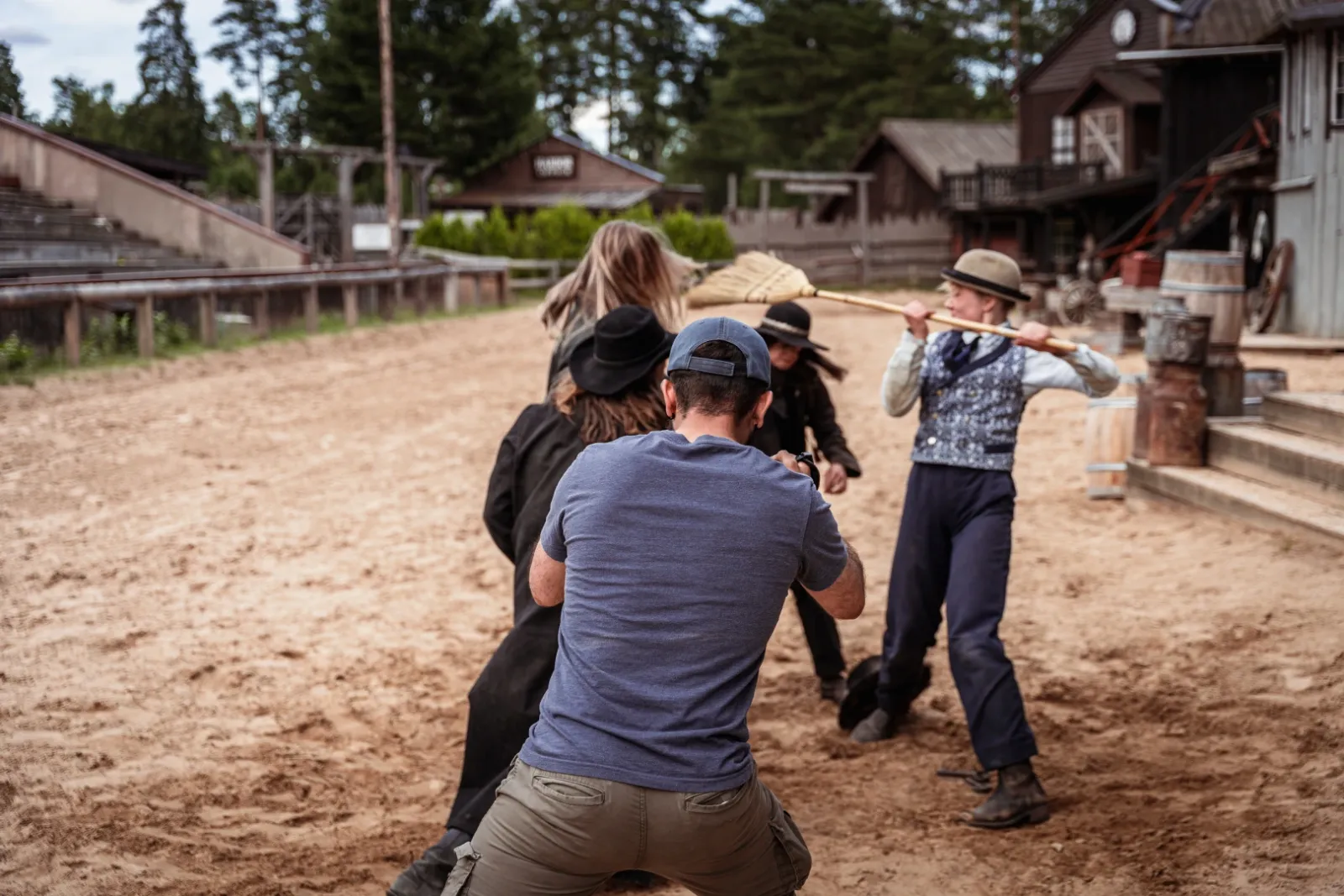
What action direction covers
- The sequence, designed for camera. Fights, falls, chases and vehicle beats planned around the shots, the cut points and what the scene has to say.
- A previs before the shoot, so your director, DOP and editor can see the sequence and change it while changes are still cheap.
- A rehearsal plan that fits the schedule, worked out with the 1st AD.
- On-set leadership of the action, with performance, camera and timing lined up for every take.
- Coverage that cuts. Bertan edits his own films, so the shots are planned for the edit before the camera rolls.
- Safety planning for every stunt and fight, together with the stunt coordinator when the production has one.
Previs: see the fight before you shoot it
A previs is a filmed rough version of the action, made before the shoot. It shows the sequence with its shots and cut points, so the director, DOP and editor can agree on it in advance. On the day, everyone shoots to a plan they have already seen: faster days, fewer surprises and a director who shows up prepared.
Below is one moment from Exiled Temple Guard, from the drawn previs to the raw take and the final cut. Bertan also planned, shot and edited the previs for the HiPhi commercial further down.
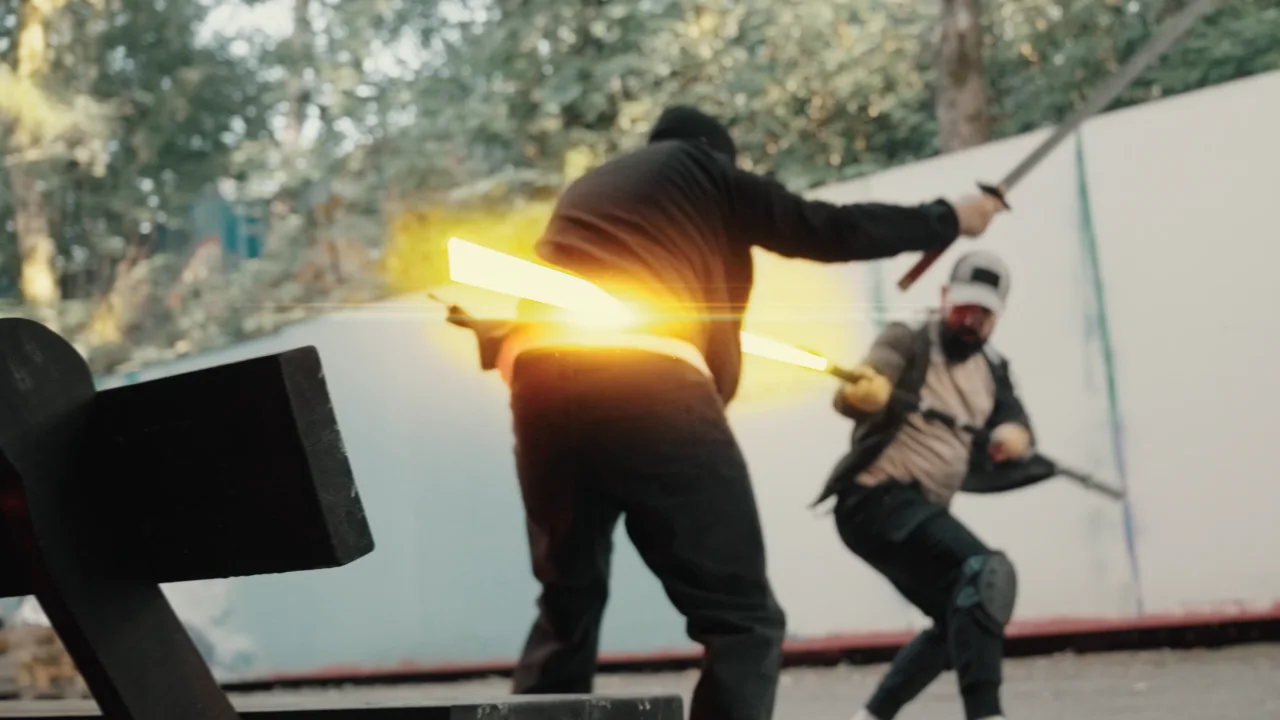
Commercial: The Future Never Sleeps
A fight in a warehouse for the HiPhi commercial The Future Never Sleeps, produced by Join Forces and directed by Joon Brandt. Bertan choreographed the fight, planned, shot and edited the previs, and performed in it as one of the stunt performers.
Action design and stunt coordination
The two jobs overlap but are not the same. The stunt coordinator is responsible for the stunt team, safety and the physical execution of each stunt. An action designer shapes the whole sequence for camera: the story beats, the shots, the rhythm of the edit and where each stunt sits in it.
On a feature they work side by side, and the action is planned together with the coordinator, who keeps responsibility for safety. On short films, commercials and branded content, one person often covers both roles. That is how Battleblade works on most smaller productions. See how to hire a stunt performer.
What action design means
Action design is the discipline of building physical sequences (fights, chases, confrontations) with the camera as the first consideration. Not as an afterthought, and not something fixed in post. The camera position, the shot size, the cut points and the spatial logic of the scene are all part of the choreography before rehearsal begins.
It is a different role from fight choreography alone. A choreographer designs the movement. An action designer designs the sequence for camera, which includes movement, but also framing, editing rhythm, coverage and how the physical action serves the story of the scene.
A related discipline is fight design, which focuses on the fight itself. Action design is broader: it covers fights, but also chases, vehicle work, falls and every other physical sequence a production needs designed for camera. For the fight itself, see fight choreography for film and TV.
The screen-first approach
Every decision (stance, distance, timing, weapon choice, camera angle) is checked against one question: does this work on screen?
A move that looks impressive in rehearsal gets cut if it does not read clearly for the lens. The geography of a fight is planned around the camera, not the performers' natural instincts. The edit is anticipated before the camera rolls, so the coverage is designed to cut, not hoped to cut in post.
Bertan works this way because he also shoots and edits: on his own films, he has to cut the footage he designed.
Questions productions ask
What does an action director do on set?
Leads the action: runs the rehearsal and the takes of each action beat with the director and the 1st AD, checks performance, camera and timing on every take, and makes sure the coverage will cut.
Do we need a previs for a short film or a commercial?
Not always, but it pays off when shoot days are few. A short previs answers coverage questions before the shoot instead of on set.
Can you work with our stunt coordinator?
Yes. The action is planned together with the coordinator, and the coordinator keeps responsibility for safety and the stunt team.
What does it cost?
Every project gets a written quote before work starts. Typical day rates are on the stunt rates page.
Want the action designed for your production from the ground up?
Discuss your action sequence