What makes it cinematic
Sword fights in film have been captivating audiences since the silent era. But what separates great cinematic sword work from realistic swordplay is not technique alone. It is storytelling. A real sword fight ends in seconds. A film fight lasts as long as the scene demands.
Cinematic sword choreography borrows from martial traditions (kenjutsu, kendo, European longsword, Filipino Kali) but its goal is entirely different. The choreographer designs movement that:
- Communicates character: who is aggressive, precise, desperate, in control
- Reads clearly on camera from the chosen angle and lens length
- Creates visual rhythm and pacing that serves the edit
- Can be performed safely, repeatedly, and consistently across multiple takes
This is why timing in film fights is often slower than reality, not because slower looks better, but because the camera needs clean lines and the editor needs material to cut with. A choreographed sword strike that misses by 40cm looks lethal on screen if the timing, angle, and reaction are calibrated correctly.
Katana choreography
The katana is a single-edged Japanese curved sword, traditionally associated with the samurai, used within kenjutsu (the school of the sword) and its modern sports derivative, kendo. Classical kenjutsu is compact, efficient, and deliberately concealed from the opponent. Film demands the opposite: expansive lines, held guard positions, and dramatic postures that read from ten metres through a telephoto lens.
Key technical principles
Ma-ai (distance control). In Japanese sword arts, ma-ai is the interval: the precisely maintained distance between two combatants that determines when and how each can strike. In film choreography, ma-ai is the choreographer's primary safety variable. Every sequence is engineered around controlling this distance beat by beat.3
Cutting lines. The katana's anatomy, specifically nagasa (blade length), kissaki (tip) and ha (cutting edge), defines how and where it cuts. Cinematic sequences reference authentic cutting lines: shomen-uchi (downward centre cut), kesa-giri (diagonal cut from shoulder to opposite hip), yoko-giri (horizontal cut), because these lines are visually legible and carry cultural meaning audiences already recognise from martial arts cinema.
Hero moments. Film choreography regularly builds in holds, pauses, and reaction beats that real swordplay never permits. These are the visual punctuation of a fight scene: moments that let the audience read the status of each combatant and feel the weight of what is happening.
Camera-first design. Every guard position, every cut line, and every distance is chosen for what it looks like from the camera's perspective, not for its martial effectiveness. This is the central discipline of cinematic katana work: making something that is safe to perform look genuinely dangerous on screen.
Katana in film: Notable examples
Lightsaber choreography
The lightsaber, a fictional energy blade from Star Wars, has arguably done more to popularise sword choreography as a mainstream art form than any real weapon. The fight sequences across the saga were choreographed by working sword masters, and the progression from trilogy to trilogy reflects genuine shifts in choreographic philosophy.
The original trilogy (1977–1983): Weight and subtext
Bob Anderson, a British Olympic fencer and film swordmaster, performed Darth Vader's lightsaber fights in The Empire Strikes Back and Return of the Jedi, uncredited at the time. The duel in the 1977 film was staged by stunt coordinator Peter Diamond.5 The style was deliberate and theatrical, influenced by European fencing and stage combat. The duels in this era are chess matches: slow, calculating, and loaded with subtext. The fight between Luke and Vader in The Empire Strikes Back is not about who is faster. It is about revelation, temptation, and the price of truth.
The technical constraints of the props (heavy, lit aluminium rods) and the age of the performers shaped the choreography profoundly. What appeared on screen as gravitas was partly pragmatic, and it worked.
The prequel trilogy (1999–2005): System and speed
Stunt coordinator and swordmaster Nick Gillard was brought in to develop a new choreographic approach for Episodes I–III. His solution was a formalised system of combat forms. Each Jedi or Sith practises a distinct fighting style, with its own philosophy and technical characteristics, drawn from real martial arts.2
This framework drew on kendo, capoeira, Kali/Escrima, and gymnastics. Actors including Ewan McGregor, Liam Neeson, Samuel L. Jackson, Christopher Lee, and Natalie Portman trained intensively for months to execute sequences that demanded genuine athleticism. The Duel of the Fates (The Phantom Menace) and the Obi-Wan vs. Anakin duel on Mustafar (Revenge of the Sith) remain benchmarks of prequel-era choreographic ambition.
Theatrical and fan choreography
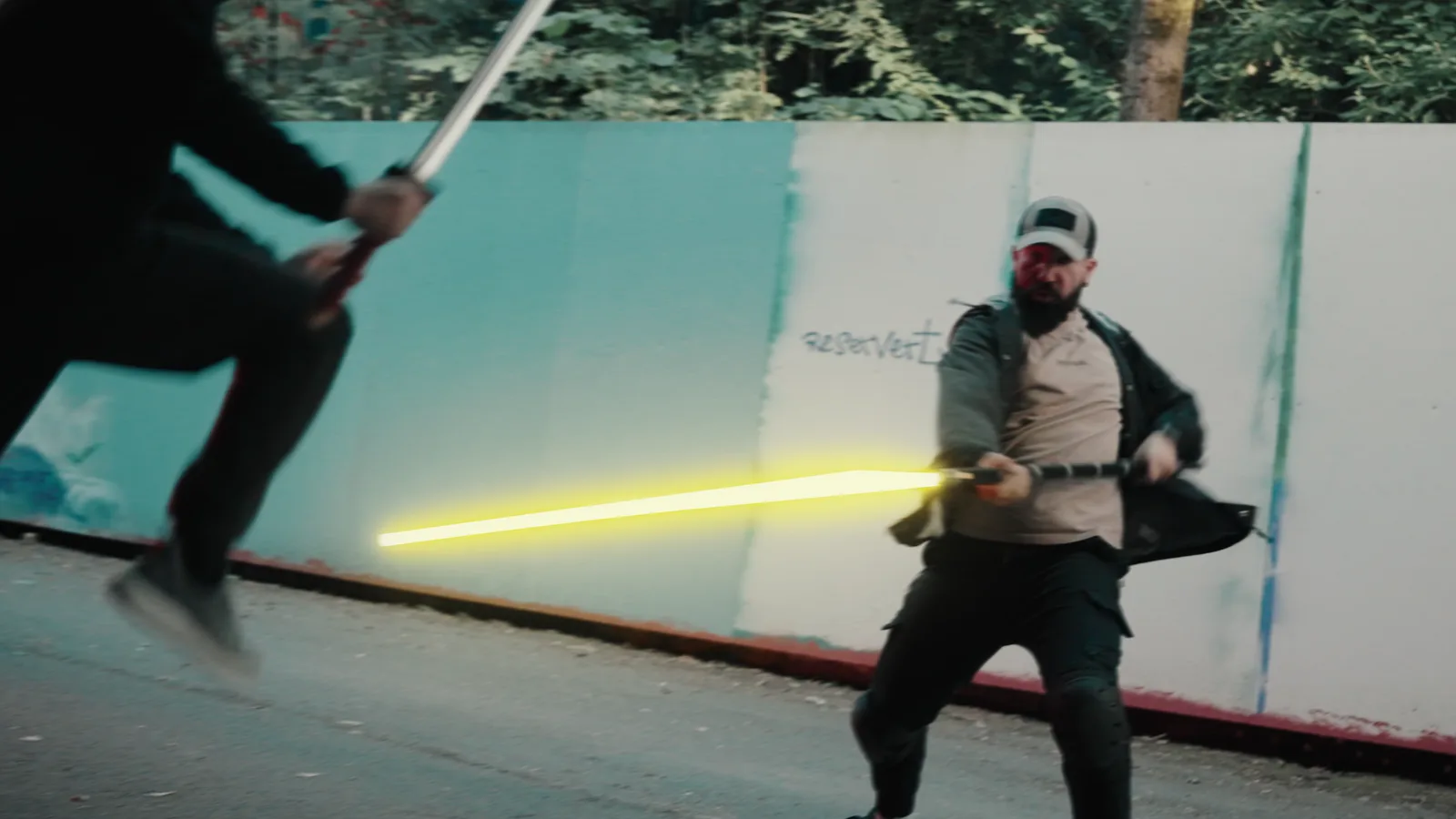
Outside major productions, lightsaber choreography has developed into a distinct performance discipline, practised in stunt training facilities, theatrical performance groups, and independent short film communities worldwide. This discipline draws primarily from two sources:
Japanese sword arts. Kendo footwork, two-handed guard positions, cutting mechanics, and the concept of ma (interval and timing) translate directly to lightsaber handling. The weapon's combat range, grip, and centre-of-gravity closely mirror the katana. This is not coincidental. George Lucas cited Akira Kurosawa as a central influence on Star Wars, and the Jedi's philosophical framework deliberately parallels Bushido, the samurai's code.1
Filipino Martial Arts (Kali / Eskrima). Blade-to-blade engagement patterns, fluid transitions between high and low lines, and the emphasis on controlling the opponent's weapon rather than simply avoiding it. Kali's approach to single and double weapon work maps cleanly onto theatrical lightsaber choreography, particularly in close-quarters exchanges.
The katana–lightsaber connection
The connection between katana work and lightsaber choreography is structural, not superficial. Both weapons have a similar effective range, similar grip mechanics, similar body alignment requirements, and similar footwork logic. A practitioner with a solid foundation in cinematic katana technique will find lightsaber choreography immediately accessible, as the movement vocabulary is largely shared.
The practical overlaps include:
- Footwork. The hanmi (half-facing stance) and okuri-ashi (sliding follow-step) of kendo are the same footwork patterns used to manage distance in lightsaber combat. Both prioritise maintaining a stable base while generating rotational power through the hips.
- Guard positions. The katana's two-handed guard postures: jodan (high guard), chudan (mid guard), gedan (low guard), which correspond directly to standard lightsaber defensive stances used across all fight forms.
- Cutting mechanics. The hip drive, shoulder rotation, and controlled follow-through of a katana cut produce the same body mechanics required for a committed lightsaber strike. Learning one makes learning the other significantly faster.
- Timing and interval. The concept of ma in Japanese sword arts, specifically the pause between actions where a decision must be made, is the same timing principle that governs all cinematic fight choreography. It is the silence between the beats.
This is why Bertan's approach at Battleblade builds lightsaber choreography on a katana foundation rather than treating them as separate disciplines. The katana teaches the fundamentals. The lightsaber is one of the places those fundamentals go.
Bertan's approach at Battleblade
Bertan's specialism is cinematic katana choreography: designing and performing sword sequences for camera, with a particular focus on the overlap between traditional Japanese sword arts and contemporary film action. His work sits at the intersection of kenjutsu's precision, action design's camera logic, and the cinematic vocabulary of lightsaber choreography developed by the Star Wars stunt teams.
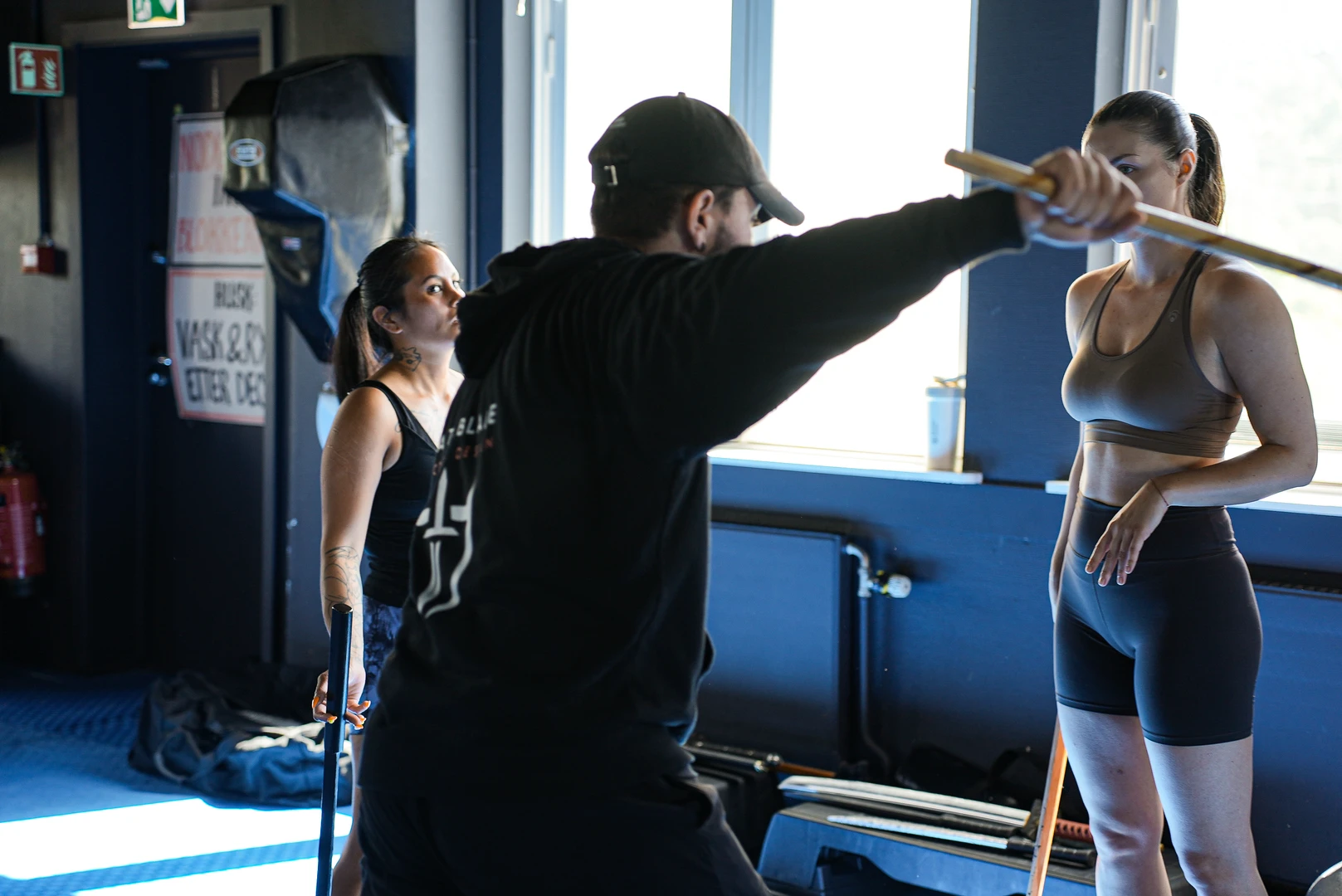
The class Battleblade runs is built directly around this skill set. Participants learn the core technical vocabulary: stance, footwork, timing, cutting lines and camera awareness, in a 2.5-hour session using training swords. Because this vocabulary is shared between katana and lightsaber work, it provides a direct technical foundation for anyone interested in either discipline.
Whether you're an actor preparing for a role, a filmmaker who wants to choreograph their own sequences, or simply someone who wants to understand how film sword fights are constructed. The class covers the essential mechanics in a practical, hands-on format.
Interested in training the technique? The class runs in Oslo and is open to all experience levels.
See the classesSword or lightsaber fight for your film?
Battleblade designs blade fights for camera, from katana duels to lightsaber choreography, and runs them safely on set. Recent work includes the lightsaber western Overkill (2026) and the stuntsaber fight Exiled Temple Guard (2026).
Plan your sword fightRelated
- Katana for Film: Stance, Cuts & Cinematic Technique
- What is Fight Choreography?
- Action Design for Film
- Cinematic Fight Choreography Classes, Oslo
References
- J.W. Rinzler, The Making of Star Wars (2007, Del Rey Books). Primary production account of the original trilogy, including influences, fight design and the role of Japanese cinema in shaping the saga's visual language.
- Nick Gillard, DVD commentary and supplementary interviews, Star Wars: Episode I–III (2005, 20th Century Fox / Lucasfilm). Gillard describes how he gave each character a distinct fighting style drawn from real martial arts.
- Miyamoto Musashi, The Book of Five Rings (Go Rin No Sho, c.1645). Foundational text on kenjutsu strategy; the concepts of ma and ma-ai are central to Japanese sword theory and underpin modern kendo and theatrical sword work alike.
- John Kreng, Fight Choreography: The Art of Non-verbal Dialogue (2008, Course Technology PTR). The industry standard reference for theatrical fight choreography across stage and screen; covers weapon work, choreographic process, and on-set safety.
- Bob Anderson biographical accounts: Variety obituary (January 2012); interviews collected in The Complete Making of Indiana Jones (Windmill Books, 2008). Anderson's work as swordsmaster and uncredited Darth Vader performer is documented across multiple primary sources.