A brief overview
The katana is a single-edged Japanese sword with a curved blade, typically between 60–75 cm in length. Historically associated with the samurai class, it is now one of the most iconic weapons in cinema, from Akira Kurosawa's samurai films to modern action and fantasy productions.
For film use, katanas range from fully functional hand-forged blades (used carefully for close-ups and specific shots) to aluminium training swords and rubber or foam stunt props (used for contact and action sequences).
Stance and footwork
Film stances are camera-motivated. The performer positions their body so the weapon, hands, and face are all readable in the same frame when possible. Footwork is designed to create clear spatial separation between performers, as distance is controlled so the camera can safely cover the action without cuts that confuse the geography.
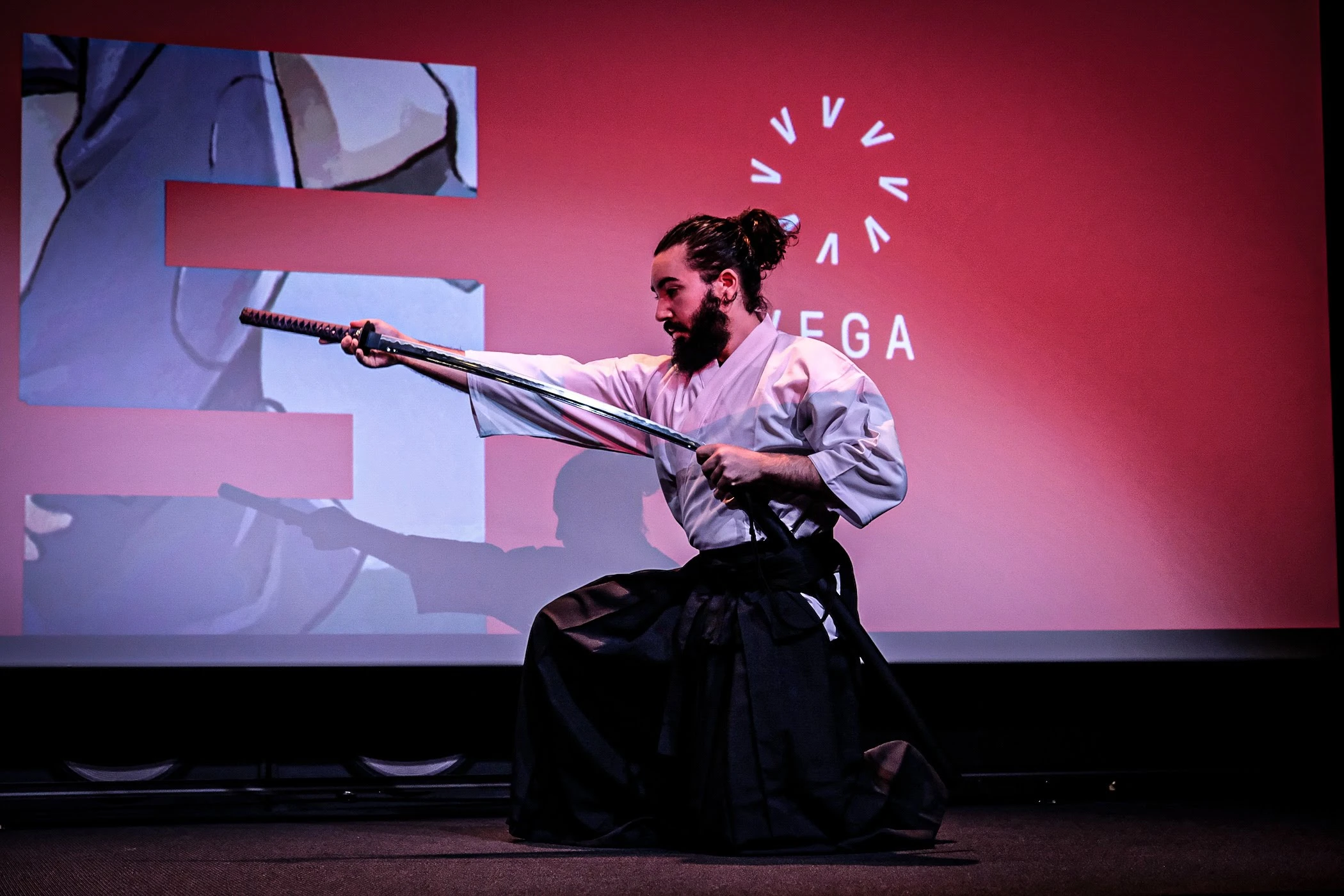
Basic cuts and blocks
Cinematic vs traditional kenjutsu
Traditional kenjutsu and its modern derivative kendo are optimised for effective combat: fast, efficient, and directed at practical killing or winning a match. Cinematic sword technique is optimised for the opposite: visible, readable, and dramatically meaningful.
Key differences: cinematic cuts are larger and slower for camera legibility; distance between performers is maintained for safety; the reaction to a cut is as choreographed as the cut itself; and blade orientation is adjusted for specific camera angles rather than for actual cutting efficiency.
Battleblade's classes teach this approach as Cinematic Katana, including its best-known move, the Grass Cutter.
Safety on Set
All katana work on a production requires a clear weapons protocol. This includes: a designated weapons master or fight choreographer responsible for handling, the use of appropriate props for each shot type (steel blades only for isolated close-up shots; training or rubber weapons for action sequences), strict rules around who handles the weapon when, and a safety briefing before every session.
Want to learn cinematic katana technique in person?
See the classSword or lightsaber fight for your film?
Battleblade designs blade fights for camera, from katana duels to lightsaber choreography, and runs them safely on set. Recent work includes the lightsaber western Overkill (2026) and the stuntsaber fight Exiled Temple Guard (2026).
Plan your sword fight