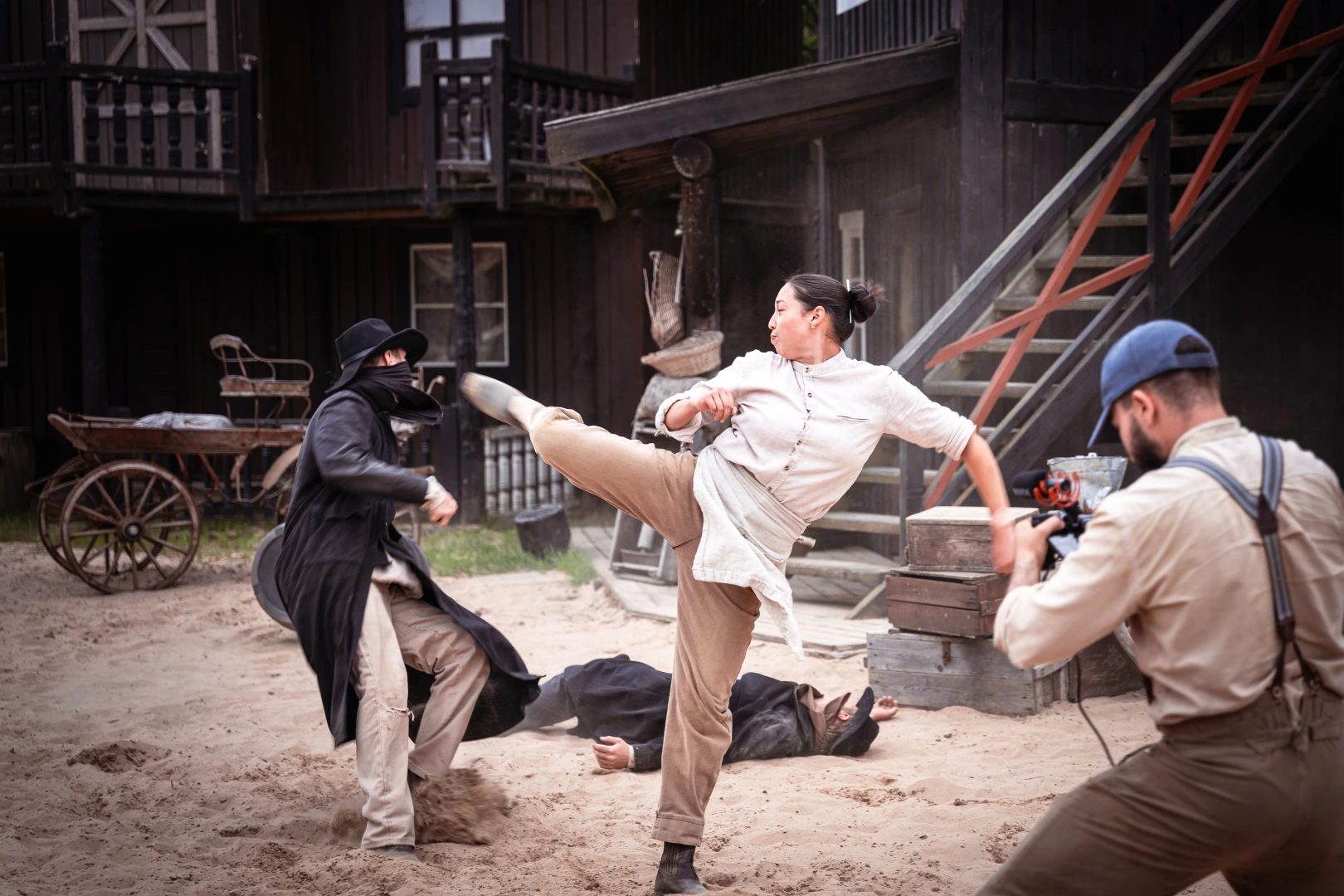
What you get
- A fight built around the story. Who has the upper hand, where the power shifts and what the audience has to read in each beat.
- A previs before the shoot. The fight is filmed and cut first, so your director, DOP and editor can sign it off. How previs works.
- Rehearsal with your cast. Timing, distance, eyelines and reactions are learned before shoot day, not on it.
- On-set direction of the fight. Worked out with the director, the 1st AD and camera, take by take.
- Safety planning for every fight, from rehearsal to wrap, and stunt performers when the scene needs them.
Selected fight work
- Evil WaitsUK feature. Stunt and fight coordinator, 2025
- 200Short film. Fight choreographer, 2025
- Mafia: The Old Country (2K)Social promo. Fight choreography and performance, 2025
- PRIMECommercial. Stunt coordinator and choreographer, 2024
- Josephine The BankerShort film. Action director, winner at Penistone Film Festival 2025
- Sett deg nedMusic video. Stunt performer with fight choreography input, 2023
Plus eleven short westerns made in one summer, each with its own fight. Watch the short films or see all credits.
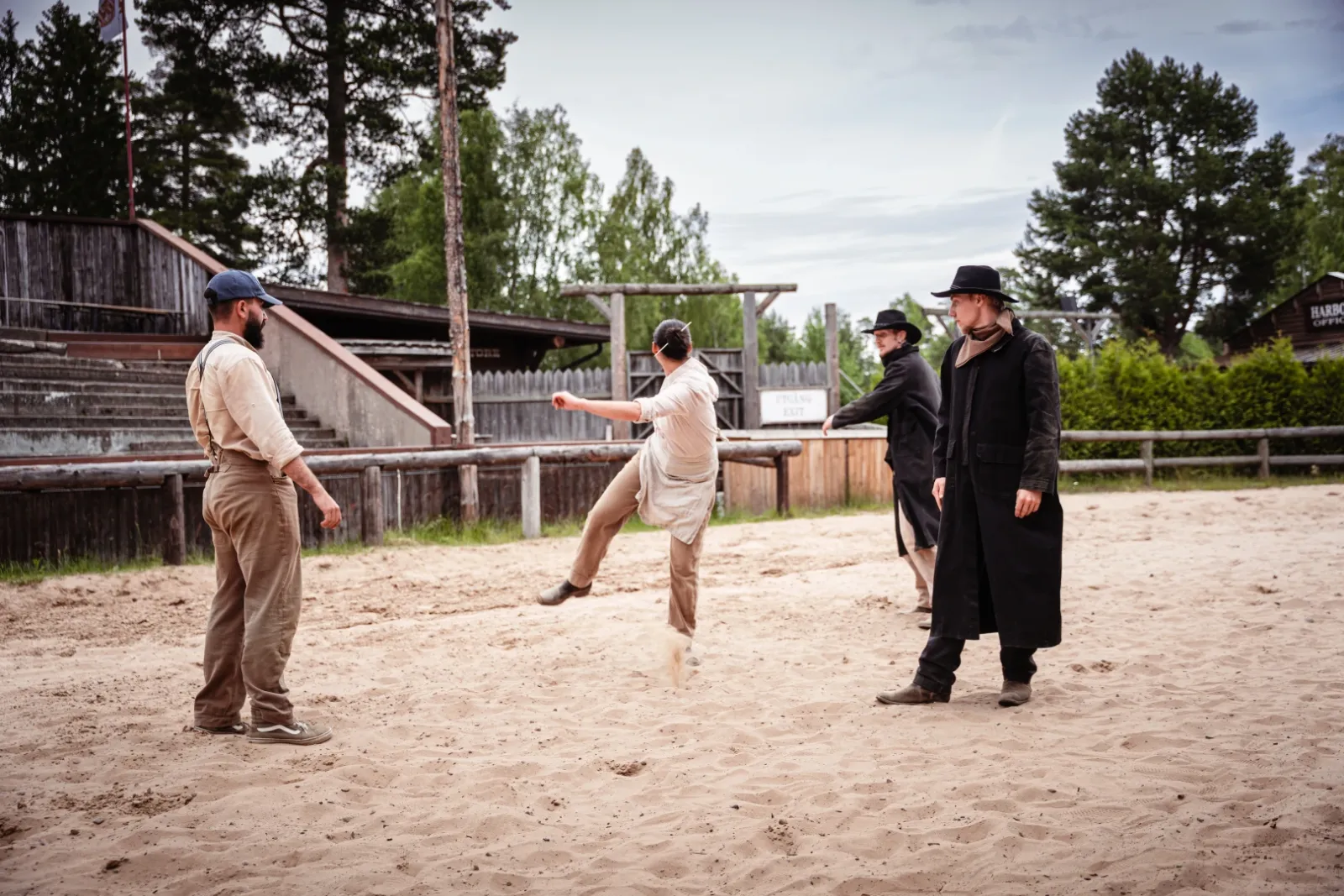
How a fight scene comes together
Concept. The choreographer reads the script and breaks down what the scene needs to achieve narratively. Who has the upper hand? Where does the power shift? What is the emotional arc? The fight has to tell a story, not just look impressive.
Rehearsal. The choreography is blocked beat by beat with the performers. Timing, spacing and the physical language of the scene are established before the camera crew arrives. Performers learn not just the moves but where to look, how to breathe and how to make every reaction visible.
Filming. The choreographer works with the director to decide how to cover the sequence: camera angles, shot sizes, cut points. A sequence designed around the edit is filmed efficiently and cuts together cleanly.
What is fight choreography?
Fight choreography is the design, rehearsal and execution of staged combat sequences for camera. It is not a martial art. It is not self-defence. It is a performance discipline, closer to dance than fighting, built entirely around how the action reads through a lens.
Productions come to us for help with fight scenes of every kind: a single punch, a full brawl, or a long choreographed sequence with weapons. For blades, see sword choreography for film.
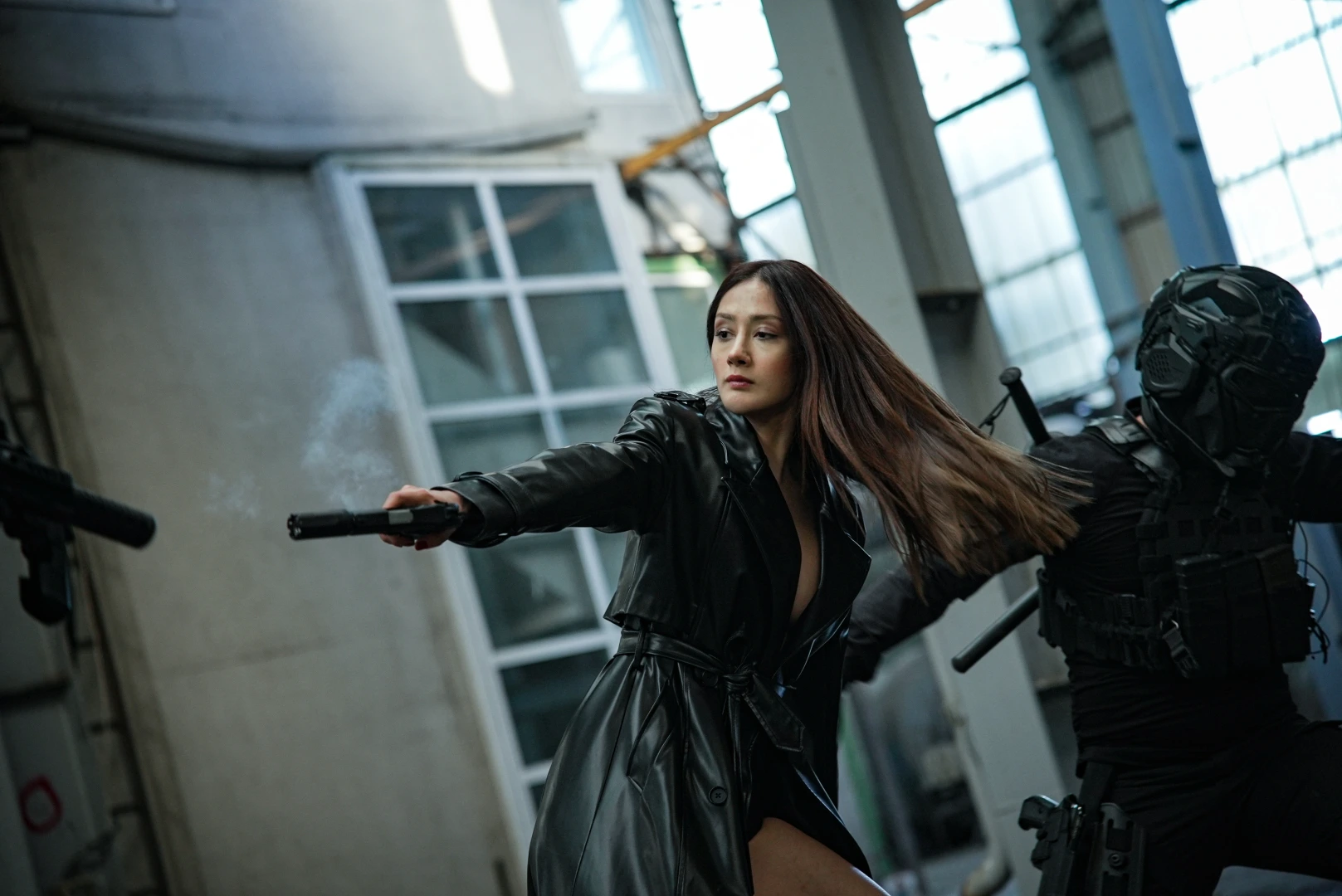
Key terminology
More terms in the fight choreography glossary.
How it differs from real fighting
Real fighting is fast, messy, unpredictable and often over in seconds. Shot raw, it is hard to follow and unsafe to repeat. Cinematic fight choreography is the opposite: it is designed to be read. Even a scene meant to feel raw and realistic is built deliberately. Movements are shaped, timing is controlled, and the spatial relationship between performers is engineered for specific camera angles.
A choreographed punch that misses by 30 cm looks real on camera if the timing, angle and reaction are correct. A punch that actually lands will often look fake because the camera is at the wrong angle to sell it.
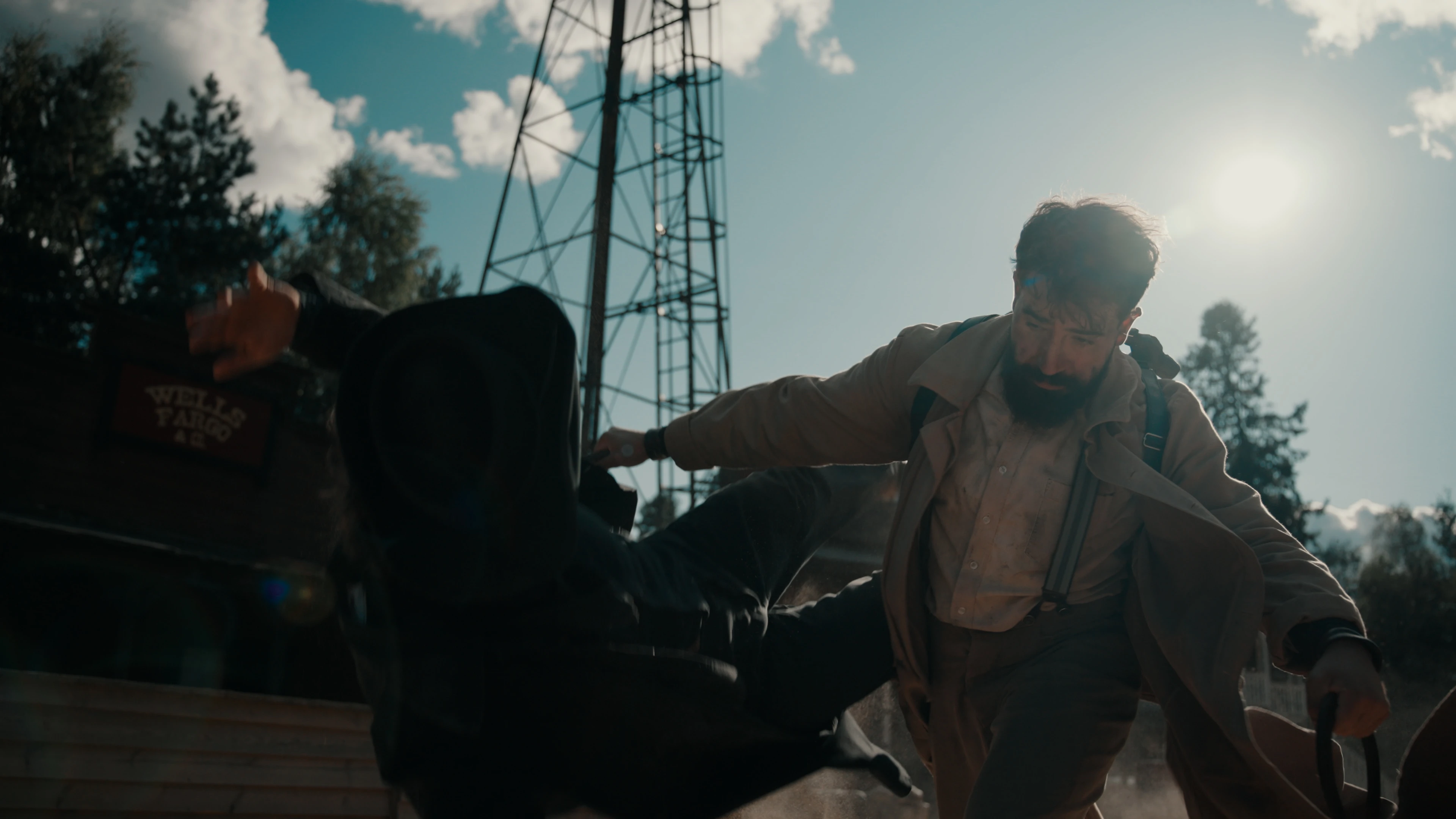
Why it matters for productions
A well-choreographed action sequence communicates character, raises stakes and advances story, all while keeping performers safe. A poorly designed one wastes shoot days, creates unusable footage and can injure people.
Productions that bring in a fight choreographer early (during pre-production, not the week of the shoot) save time, reduce risk and get better footage. The choreographer knows what the camera needs before the camera is there.
Questions productions ask
What does fight choreography cost?
Every project gets a written quote before work starts. Typical day rates, next to the Norsk filmforbund guideline rates, are on the stunt rates page.
How early should we bring you in?
As early as possible in pre-production, so rehearsal time and coverage can be planned. If your shoot is close, get in touch anyway and we will tell you what is realistic.
Do you work outside Oslo?
Yes. Battleblade is based in Oslo and works across Norway and abroad. Travel and prep days are agreed up front.
Can you bring stunt performers too?
Yes, when the scene needs them. Bertan performs and coordinates stunts himself and builds the team for each project from people he has worked with. See stunt performer.
Planning a fight scene?
Plan your fight scene